Brain Anatomy Overview
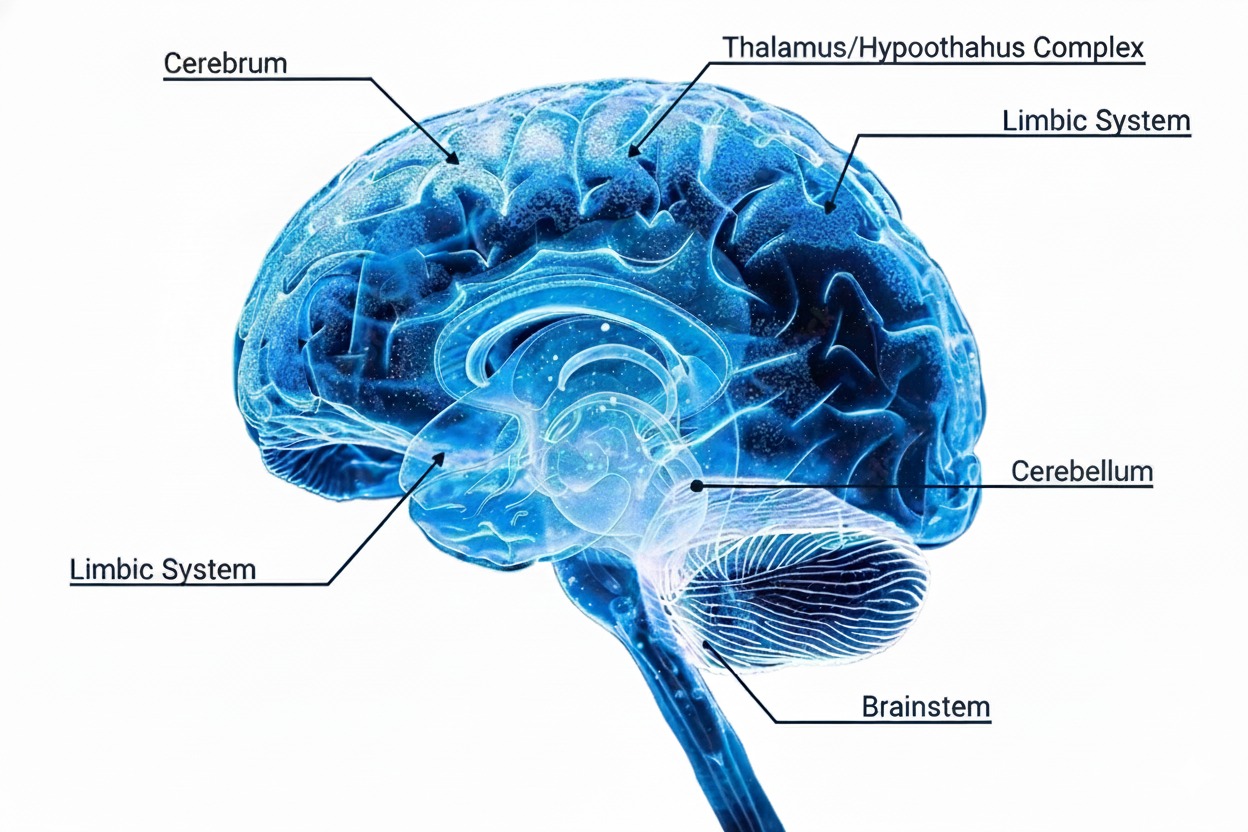
Cerebrum
The largest region of the brain responsible for higher cognitive functions, including memory, reasoning, sensory interpretation, and voluntary movement control.
Limbic System
A network of structures that regulate emotions, motivation, and memory formation. Commonly impacted in early Alzheimer’s due to its role in emotional memory.
Thalamus / Hypothalamus Complex
Acts as a relay center for sensory information and regulates vital functions such as hormones, temperature, hunger, and circadian rhythm.
Cerebellum
Responsible for smooth coordination of movements, posture, and balance. Contains dense neural networks crucial for motor accuracy.
Brainstem
Controls vital life functions such as breathing, heart rate, and digestion. Acts as the main communication pathway between the brain and body.
How Alzheimer’s Impacts Brain Anatomy
Alzheimer’s Disease progressively damages key brain regions shown above. The hippocampal areas within the limbic system are typically affected first, leading to memory loss. As degeneration spreads to the cerebrum, reasoning, language, and sensory processing decline. Later stages impact the thalamus and brainstem, affecting motor control, sleep regulation, and vital functions. Understanding each region’s role helps visualize how cognitive decline develops over time.